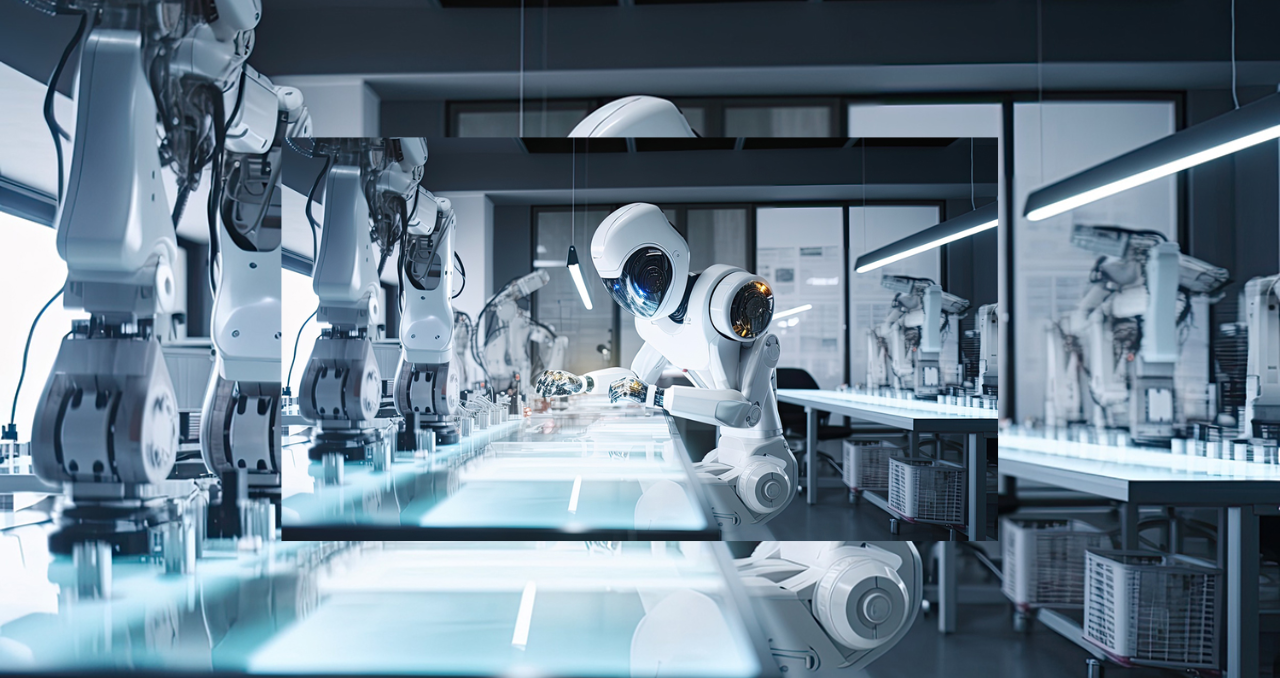
Currently, artificial intelligence (AI) and machine learning (ML) are pivotal in transforming the manufacturing sector. These technologies are propelling the industry toward greater automation, enhancing operational speed and efficiency, and reducing the costs of consumer goods.
Manufacturers are already utilizing computer vision (CV) to refine production processes. By integrating CV with AI, manufacturers can substantially boost production efficiency and quality, crucial aspects of any effective manufacturing operation. As automation evolves with more interactive human-machine interactions, AI’s role in bolstering workplace safety is expanding.
AI empowers machines to emulate human cognitive functions in problem-solving and decision-making, allowing for rapid and precise object detection and prediction. When combined with conventional CV, AI enhances the ability to swiftly identify anomalies in manufacturing settings, from spotting defects on cereal boxes on the production line to detecting scratches on vehicles in assembly lines, thus improving operational efficiency and reducing costs.
Implementing AI in industrial automation presents challenges. AI and ML are relatively novel in this context compared to established CV applications. Many automation engineers lack the specialized knowledge to create sophisticated AI models. However, tech firms are addressing these barriers by offering comprehensive solutions that include both advanced, energy-efficient hardware and pre-developed AI algorithms, fostering broader adoption in manufacturing.
In addition to identifying anomalies, AI-enabled robots are being introduced to work alongside humans in factories. This includes autonomous mobile robots (AMRs) for package transport in warehouses and collaborative robots (cobots) that assist in product assembly. These robots blend machine precision with human skill, enhancing productivity and safety by taking over repetitive or physically demanding tasks and ensuring a safe collaboration space with human workers.
Advances in edge AI processing are essential for the autonomy of these robots, enabling real-time data processing and decision-making on the device rather than relying on cloud communication. This is crucial for the immediate and complex computations required in manufacturing.
Neural network processing, essential for AI applications, demands significant computational power and energy, often necessitating expensive, robust hardware. However, recent innovations, such as analog compute-in-memory, have revolutionized neural network processing, making it more energy-efficient and adaptable for various applications, from endpoint devices to edge servers.
As the demand for factory automation escalates, industries are increasingly adopting AI-driven machines to enhance process efficiency. This trend is set to introduce more advanced AI applications in manufacturing, from sophisticated anomaly detection systems to autonomous and collaborative robots, further transforming the factory floors of the future.