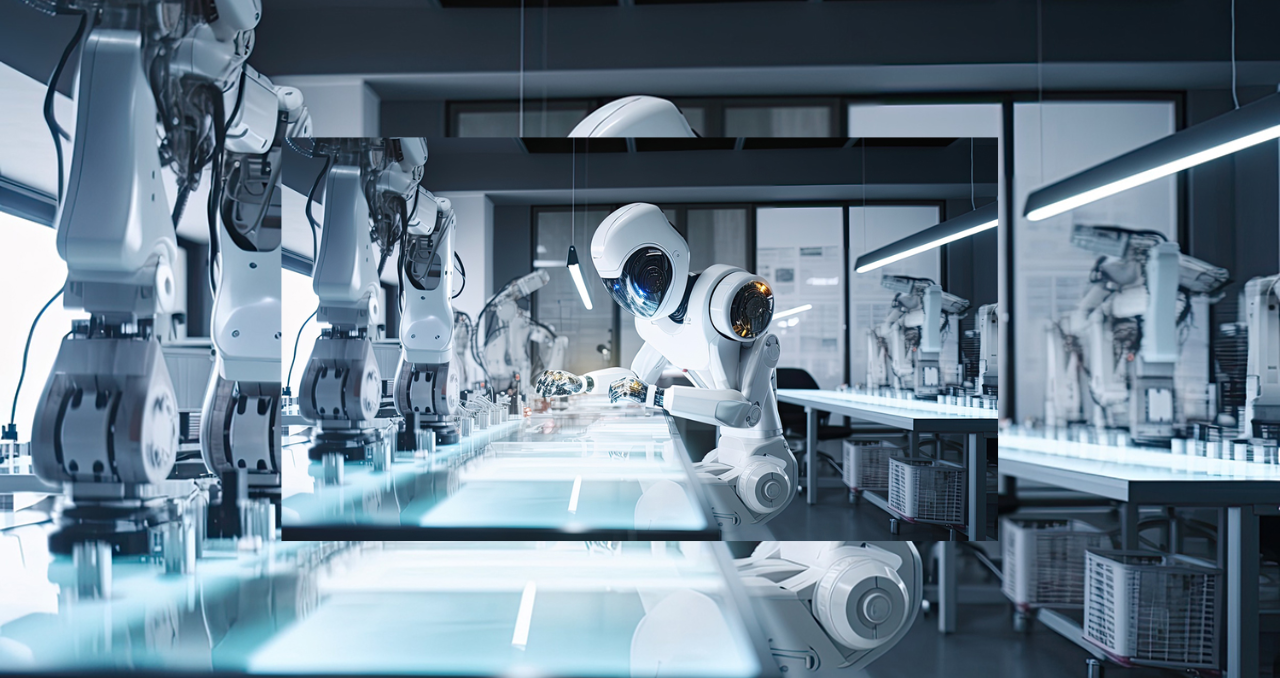
Discover how AI is increasingly being adopted in conventional sectors like manufacturing, where its ability to boost automation and efficiency is fostering greater trust in the technology.
Artificial Intelligence (AI) is becoming a staple in daily life, appearing everywhere from voice-activated assistants like Siri and Alexa to personal robotics, automotive technologies, and innovative healthcare solutions. However, there remains a hurdle of acceptance, as many are still coming to grips with the technology and its potential drawbacks, such as safety issues, job displacement, or feelings of depersonalization.
As AI continues to spread, its adoption in traditional sectors such as design and manufacturing (D&M) faces hesitancy. Despite this, the untapped potential of AI is enormous. Projections by the World Economic Forum suggest AI could generate up to $13 trillion in global economic activity and boost global GDP by 2%. The decision for businesses to adopt AI tools raises issues, especially regarding data sharing and security. Yet, as firms witness tangible benefits from AI without compromising their data or needing specialized skills, confidence in AI is expected to grow.
AI’s Deep Roots in Manufacturing
AI is not as new to manufacturing as some might believe. “I began my career in AI with 3D vision guided robotics systems for General Motors production plants 40 years ago,” notes Dr. Jay Lee, an industrial AI pioneer and professor at the University of Maryland College Park. “AI has been functioning in this sector long before its recent popularization.” Dr. Lee’s early work in AI enabled robots to assemble cars by intelligently identifying and adjusting their paths automatically.
Dr. Lee’s expertise has been sought by many companies to enhance their operations. For instance, when Toyota’s Georgetown, KY, plant faced frequent breakdowns due to its compressed air system, Dr. Lee’s integration of AI with sensors on the production line reduced maintenance costs by 50% and eliminated downtime since its implementation in 2006.
Expanding AI Capabilities Beyond Operations
Today, AI’s capabilities in manufacturing have evolved beyond mere operational tasks. It now assists companies in innovating through generative design, which facilitates the iteration and simulation of different scenarios to achieve optimal outcomes. Although 66% of business leaders recognize the necessity of AI in the near future, a study by Boston Consulting Group reveals that only 16% of manufacturing firms have achieved their AI objectives. Despite its early advancements, the manufacturing sector has been slow in deploying AI effectively.
Manufacturing generates roughly 1,812 petabytes of data annually, and turning this data into actionable insights could drive innovation—if manufacturers allow it. Deloitte reports that 67% of executives feel uneasy about sharing their data with other organizations. “Data needs to be repurposed for specific uses, such as analytics or machine learning applications,” says Alec Shuldiner, director of Data Acquisition and Strategy at Autodesk.
AI’s effectiveness hinges on the quality of data it receives. “Poor data yields poor results,” Dr. Lee asserts. “Data must be relevant and accurate to serve its intended purpose effectively, such as predicting machinery failure.”
Building Trust and Leveraging AI’s Full Potential
To overcome the ongoing reluctance to embrace AI, manufacturers must learn to trust the unseen. They are comfortable with AI handling predictive maintenance, but the broader capabilities of generative AI remain largely unexplored. Yet, embracing these capabilities is a risk worth taking. As manufacturers gain a deeper understanding of how AI can provide comprehensive visibility, it will unlock more opportunities within their operations.
The Future of AI in Manufacturing
As cloud-connected factories become more commonplace, AI can rapidly collect and analyze vast amounts of data in real time, enabling manufacturers to make quicker, more informed decisions. Dr. Lee highlights the benefits of AI with “The Three Ws”: reducing work, waste, and worry. “AI relieves concerns by improving visibility,” he explains. “Just as community surveillance cameras reduce worry, AI gives us the ability to monitor operations effortlessly.”
In design, AI helps navigate complex trade-offs, allowing quicker, more efficient, and sustainable design processes. As companies like Toyota and General Motors continue to innovate with cloud computing and AI, other manufacturers are gradually following suit. “Start small, see the benefits, and then expand,” Dr. Lee advises.
Currently, 68% of manufacturers have at least one AI-driven process or use case, proving small steps in AI can build trust and demonstrate its value. “The focus should be on understanding AI’s benefits,” Dr. Lee concludes. “Do not let fears hinder progress.”