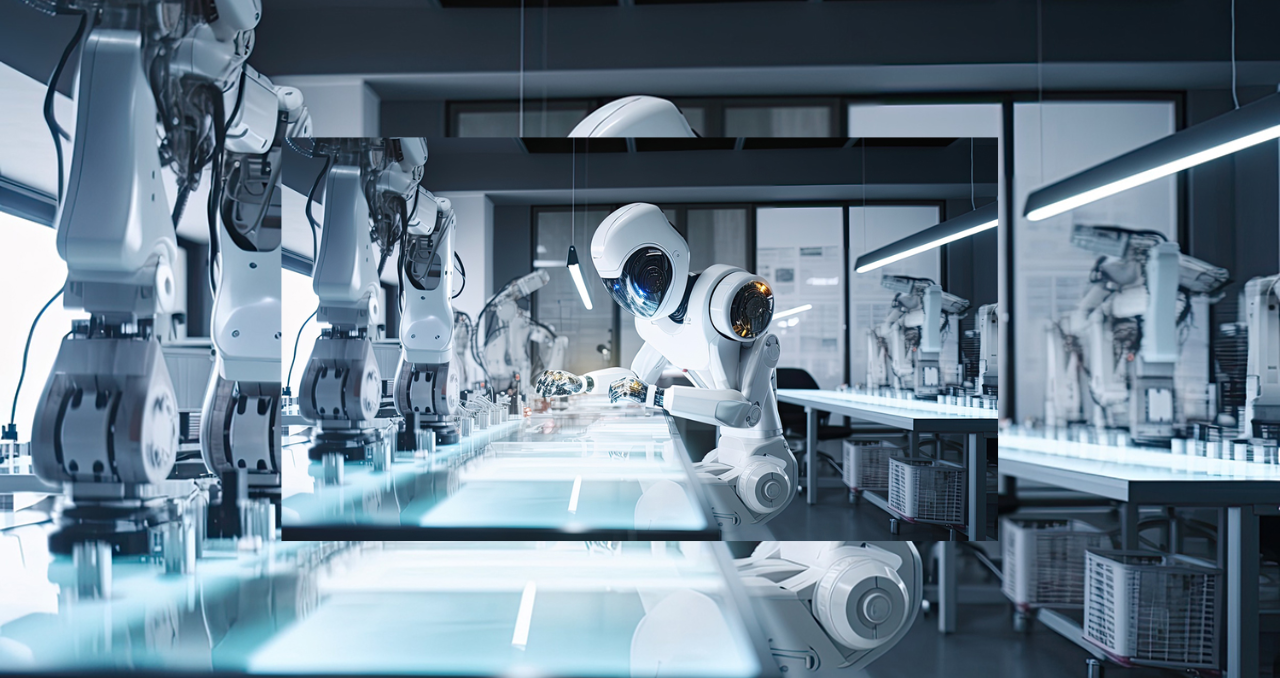
Challenges of Data-Driven AI in Manufacturing
In recent years, data-driven Artificial Intelligence (AI) has achieved remarkable successes in various domains such as recommendation systems, gaming, facial recognition, translation, text generation, and fraud detection. This AI model relies heavily on large datasets for training. While ample data is easily accessible or generated for some applications (like social media images or gaming simulations), acquiring quality data in manufacturing settings is often time-consuming and costly. As a result, the purely data-driven AI model is not a viable solution for many smart manufacturing scenarios. A different AI approach is necessary.
Introducing Physics-Informed AI
The manufacturing sector benefits from a wealth of existing models and process knowledge that doesn’t need to be rediscovered through a data-driven approach. These traditional models often make simplifying assumptions to manage complexity but are only approximations. Physics-informed AI addresses this by integrating known models and augmenting them with data-driven insights based on experimental data to bridge gaps. This AI model applies physics-based constraints to ensure the system doesn’t contradict established knowledge. For example, the AI system can be programmed to understand that increasing pressure on a tool should result in greater deflection without needing extensive testing for validation. If data suggests otherwise, it likely indicates a sensor error or installation issue.
Physics-informed AI limits the solution space, making the problem more manageable in terms of data requirements. For instance, in predicting output based on input, if an increase in input should increase output, the model can be simplified and trained with less data. However, this approach demands more complex representations and methods to handle such constraints effectively. Simple neural networks trained on raw data may not suffice as they might not maintain necessary process constraints, especially if the training data includes noise.
Use Cases of Physics-Informed AI in Smart Robotic Cells
Physics-informed AI is particularly useful in smart robotic cells for diverse manufacturing tasks:
- Defect Detection: Traditional machine learning analyzes images to detect defects, but acquiring sufficient images of actual defects is challenging. Physics-informed AI can simulate realistic defects in virtual models to generate the necessary images for training, blending these with real images to enhance training effectiveness.
- Autonomous Finishing: In tasks like sanding or polishing, physics-informed AI predicts sensor errors based on operating conditions using known sensor performance models, ensuring data quality for better autonomous decisions.
- Robot Motion Limits: For robotic cells with hoses or cables, learning frameworks informed by physics can predict motion limits, balancing efficiency and safety to prevent damage and operational interruptions.
- Material Process Modeling: For new materials, while exact relationships between process parameters and outcomes might be unknown, qualitative knowns can guide AI models. Training models use loss functions that penalize deviations from these known constraints, speeding up the autonomous model-building process.
- Prognostics and Health Management: Physics-informed AI also plays a critical role in maintaining system reliability, using known causal relationships to predict system states and manage tool wear, for example, in robotic sanding.
Physics-informed AI is revolutionizing manufacturing by enabling smart robotic cells to operate autonomously, ensuring consistent quality, and enhancing system health monitoring. This technology is set to transform automation in high-mix manufacturing environments.