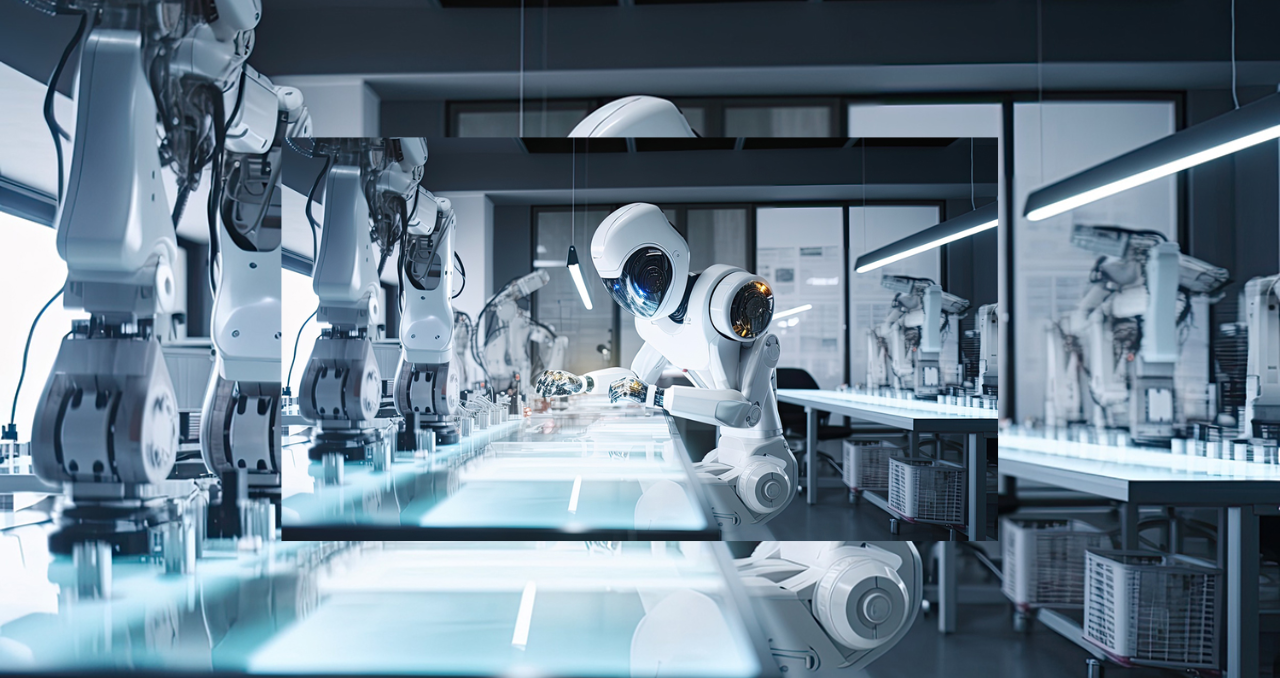
Artificial Intelligence (AI) is pivotal in redefining industrial automation, transforming conventional manufacturing processes into more efficient, productive, and intelligent operations.
Let’s delve into the multifaceted roles AI plays in this sector:
- Predictive Maintenance:
AI’s capability to sift through sensor data and historical maintenance records enables the prediction of potential equipment failures. Utilizing machine learning and pattern recognition, AI identifies data anomalies signaling impending issues, facilitating preemptive maintenance actions. This foresight minimizes unexpected downtime, enhances productivity, and curtails maintenance expenses.
- Quality Control and Inspection:
Leveraging AI-powered computer vision, manufacturing processes undergo rigorous scrutiny, identifying defects or deviations from quality norms. These systems, enhanced by continuous learning, offer real-time quality assurance, diminish manual inspection reliance, and uphold consistent product standards, contributing to operational efficiency and error reduction.
- Intelligent Robotics:
AI fosters the evolution of robots that autonomously execute complex tasks. These intelligent robots, integrated with AI, undertake diverse manufacturing roles — from assembly to precision-driven tasks — adapting dynamically to data inputs, enhancing operational speed, efficiency, and safety, while synergizing with human operators to relieve them of monotonous or hazardous tasks.
- Process Optimization:
AI algorithms dissect extensive data from sensors and production lines, unveiling patterns and inefficiencies. Such insights enable the refinement of manufacturing processes, boosting resource utilization, reducing waste, and escalating overall productivity. AI’s data processing prowess offers a granular understanding of manufacturing dynamics, paving the way for continuous optimization.
- Demand Forecasting:
Employing machine learning, AI analyzes historical sales data, market trends, and external variables to forecast demand with enhanced precision. This forecasting aids in aligning production with market demand, optimizing inventory levels, and streamlining supply chain operations, thereby mitigating costs and elevating customer satisfaction.
- Autonomous Vehicles and Drones:
In industrial contexts, AI-driven autonomous vehicles and drones undertake tasks like material transport and operational monitoring. These intelligent systems navigate complex environments, optimizing logistics, enhancing operational efficiency, and contributing to safety and cost reduction.
- Decision Support Systems:
AI supplements decision-making with exhaustive data analyses, offering insights and recommendations that might elude human scrutiny. These systems assist in refining production schedules, anticipating maintenance needs, and identifying process bottlenecks, thereby fortifying decision-making and operational performance.
Energy Optimization: AI’s analysis of energy usage and operational data aids in fine-tuning energy consumption, advocating for sustainability while trimming costs. These AI-enabled systems optimize energy deployment, enhancing efficiency and environmental stewardship.
- Supply Chain Management:
AI revolutionizes supply chain management by enhancing transparency, optimizing inventory and logistics, and forecasting demands accurately. It scrutinizes diverse data sources to foresee and mitigate supply chain disruptions, optimizing operational resilience and customer satisfaction.
- Human-Robot Collaboration:
AI propels the advent of collaborative robots (cobots) that safely interact with human counterparts, combining AI’s precision with human dexterity. These cobots contribute to diverse tasks, fostering an environment where humans and machines coalesce to enhance productivity and safety.
The integration of AI in industrial automation necessitates a thorough understanding of AI technologies, adept data management, and seamless system integration, with a keen focus on data security, employee engagement, and privacy considerations. When effectively implemented, AI’s role in industrial automation not only bolsters efficiency and quality but also significantly uplifts a company’s competitive edge in the global market.